How do you improve B2B prospecting conversations?
Most prospecting calls fail not because the product is wrong, but because the conversation is. If you are working in B2B sales, the quality of your early conversations determines everything that follows. This page explores how to make those first exchanges more relevant, more structured, and more likely to lead somewhere.
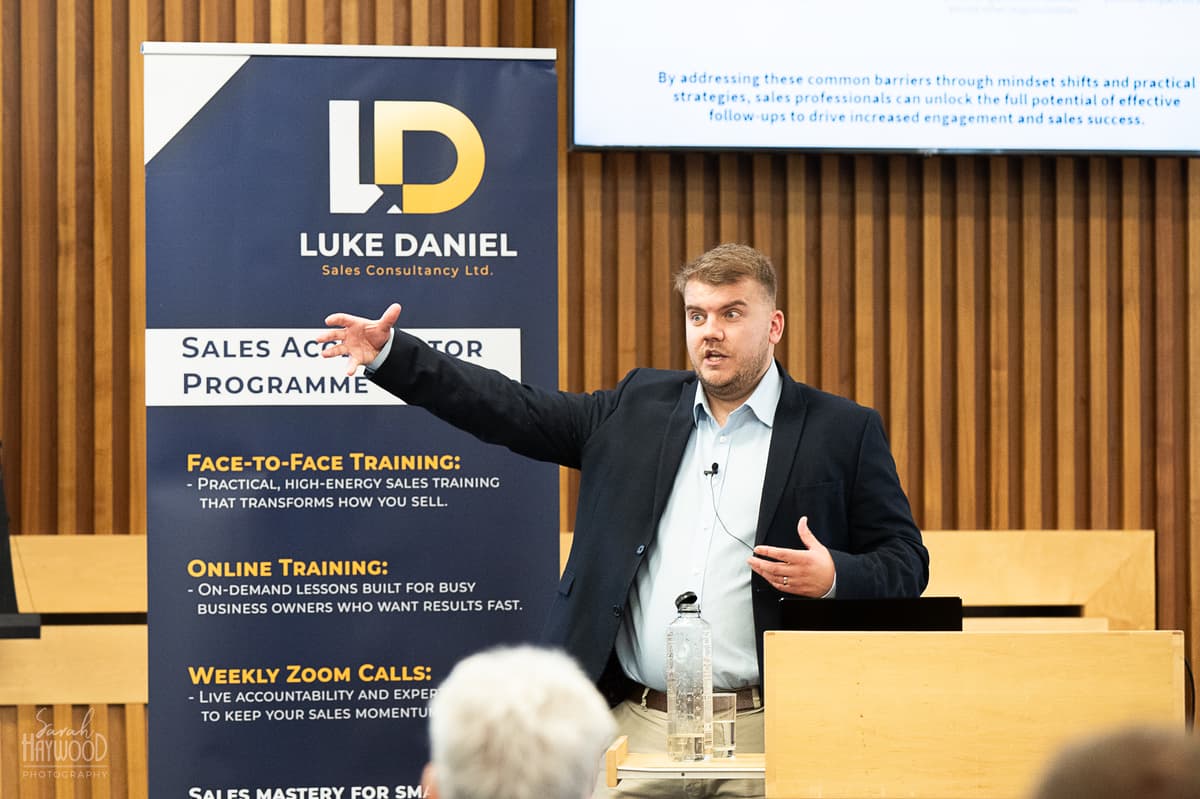
Better Prospecting Conversations
The direct answer: relevance changes everything
B2B prospecting conversations improve when you stop leading with what you sell and start leading with what the prospect is dealing with. That single shift changes the dynamic entirely.
When a prospect picks up the phone and hears a generic pitch, they disengage almost immediately. They have heard it before. They know what is coming. But when someone opens a conversation with something specific to their business, their industry, or a challenge they are actually facing, they listen.
Better prospecting is not about being more persuasive. It is about being more relevant. That requires preparation, genuine curiosity, and a willingness to ask questions rather than deliver a monologue.
The sellers who consistently convert prospecting calls into meetings are not the most confident talkers. They are the ones who do their homework, ask thoughtful questions, and make the prospect feel like the conversation is worth having.
Why most prospecting conversations fall flat
The biggest problem in B2B prospecting is not a lack of effort. It is a lack of structure and relevance. Many sellers pick up the phone with a vague sense of what they want to say, but no clear plan for how to make the conversation useful for the person on the other end.
There is also a tendency to over-rely on scripts. Scripts can help with consistency, but they often sound robotic and fail to adapt to the specific context of each call. A prospect running a 20-person logistics company in the Midlands has different pressures to a head of procurement at a national firm. Treating them the same way guarantees mediocre results.
Many sellers also rush to pitch too early. They treat the prospecting call as a chance to explain their product, when it should be a chance to understand the prospect's situation. If you are doing most of the talking on a prospecting call, the balance is wrong.
Finally, there is the issue of follow-up. Even when a call goes well, many sellers fail to agree a specific next step. They end with "I'll send some information over" and then wonder why the prospect never responds. Without a clear reason to continue, the conversation dies.
A practical framework for better prospecting calls
Improving prospecting conversations does not require a personality change or a new script. It requires a shift in how you prepare, how you open, and how you close each call.
The framework below is built around what consistently works in UK B2B environments, where buyers are time-poor, sceptical of cold approaches, and respond best to relevance and professionalism.
Each step is designed to increase the likelihood that the prospect stays engaged and agrees to a meaningful next step.
Prospecting Conversation Framework
Step 1: Pre-Call Research
Before picking up the phone, spend two to three minutes understanding the prospect's business. Look at their website, recent news, LinkedIn activity, or industry trends. Find one thing that gives your call a reason to exist beyond "I want to sell you something."
Step 2: Relevant Opening
Open with something that connects to their world. Reference a challenge common in their sector, a trend affecting their type of business, or something specific you noticed in your research. This signals that you have done your homework and earns you the first 30 seconds of attention.
Step 3: Diagnostic Questions
Once the prospect is engaged, shift into questions. Ask about their current situation, what is working, what is not, and what they would like to change. Listen carefully. The goal is to understand whether there is a genuine fit, not to force one.
Step 4: Agreed Next Step
End the call by agreeing a specific next step. Not "I'll send some info." Instead, propose a short follow-up meeting, a call with another stakeholder, or a specific action. A clear next step signals professionalism and keeps momentum alive.
A realistic scenario: when relevance opens the door
Consider Sarah, a business development manager at a commercial insurance broker in Birmingham. She is tasked with winning new clients among mid-sized manufacturing firms across the West Midlands.
Previously, Sarah's approach was straightforward: call, introduce the company, offer a quote review, and hope for interest. Her conversion rate from call to meeting sat at around 3%. Most prospects said they were happy with their current provider and ended the call politely.
After working on her prospecting approach, Sarah changed her method. Before each call, she spent a few minutes researching the company. She looked at their website, checked for recent press, and reviewed any sector-specific risks that might be relevant.
On one call, she opened by referencing a recent change in employers' liability regulations that specifically affected manufacturers. She asked whether the prospect had reviewed their cover in light of the change. The prospect paused, then said, "Actually, no. We haven't looked at that yet."
That single moment of relevance opened a conversation that led to a meeting the following week. Sarah did not pitch her services on that first call. She asked questions, listened, and agreed a specific time to continue the conversation.
Her conversion rate from call to meeting improved to around 11% within three months. The difference was not confidence or charisma. It was preparation and relevance.
Practical behaviours that improve prospecting conversations
Spend at least two minutes researching each prospect before calling. Even a small amount of context makes a noticeable difference to how the call opens.
Avoid opening with "I just wanted to introduce myself." Lead with something relevant to the prospect's business, sector, or current challenge.
Ask open questions early and listen carefully. Prospects respond better when they feel heard, not sold to.
Keep your initial explanation of what you do to two sentences or fewer. If the prospect wants more detail, they will ask.
End every call with a specific next step. "I'll send some info" is not a next step. "Shall we book 20 minutes next Tuesday to discuss this further?" is.
Track what works. Note which openings, questions, and approaches lead to meetings. Over time, patterns emerge that you can repeat.
Common mistakes that weaken prospecting calls
Calling without any research. If you know nothing about the person or business you are calling, your opening will be generic and forgettable.
Talking too much. If you are doing more than 40% of the talking on a prospecting call, the balance is wrong. Your role is to ask and listen, not to present.
Treating every prospect the same way. A managing director of a 10-person firm has different priorities to a procurement lead at a 200-person company. Adjust your approach accordingly.
Ending with a vague follow-up. "I'll drop you an email" is not a commitment. Always agree a specific date, time, or action before hanging up.
Giving up after one attempt. Most B2B prospects require multiple touches before engaging. A single unanswered call is not a rejection.
The commercial impact of better prospecting
Prospecting is the front end of your pipeline. If the conversations are weak, the pipeline is weak. If the conversations are strong, everything downstream improves: qualification is cleaner, proposals are more accurate, and close rates increase.
For UK SMEs and mid-market businesses, improving prospecting conversations has a disproportionate impact on revenue. Most sales teams do not need more leads. They need better conversations with the leads they already have.
When prospecting is done well, it also builds the seller's confidence. Each meaningful conversation reinforces that the process works. Over time, prospecting shifts from something that feels uncomfortable to something that feels purposeful and effective.
The best prospectors are not the loudest or most persistent. They are the most prepared and the most relevant.
Continue developing these skills
B2B Sales Skills
Core B2B sales skills and frameworks for complex selling environments.
Read moreB2B Sales Training
Live training to build B2B sales skills in practice.
View courseFrequently Asked Questions
How much research should I do before a B2B prospecting call?
Even two to three minutes of focused research makes a noticeable difference. Look at the prospect's website, LinkedIn, or recent news to find one relevant talking point that gives your call a reason to exist beyond a generic pitch.
What is the biggest mistake salespeople make on prospecting calls?
The most common mistake is leading with a product pitch instead of something relevant to the prospect's situation. When you open with what you sell rather than what they are dealing with, most prospects disengage within seconds.
How do I end a prospecting call effectively?
Always close by agreeing a specific next step rather than a vague follow-up. Propose a short meeting, a call with another stakeholder, or a defined action with a date. A clear next step signals professionalism and keeps momentum alive.
Is prospecting the main issue to address first?
Improving prospecting conversations can help, but the business may need more opportunities, stronger conversations, or improvement later in the sales process.
The Sales Control Diagnostic reviews Prospect, Assess, Convert and Execute to identify whether the main bottleneck sits in opportunity creation or elsewhere in the sales process.