How do you build better B2B sales conversations?
In B2B sales, your conversations are your competitive advantage. The quality of every meeting, call, and follow-up determines whether a deal progresses or stalls. This page explores how to structure conversations that create clarity, build trust, and move opportunities forward.
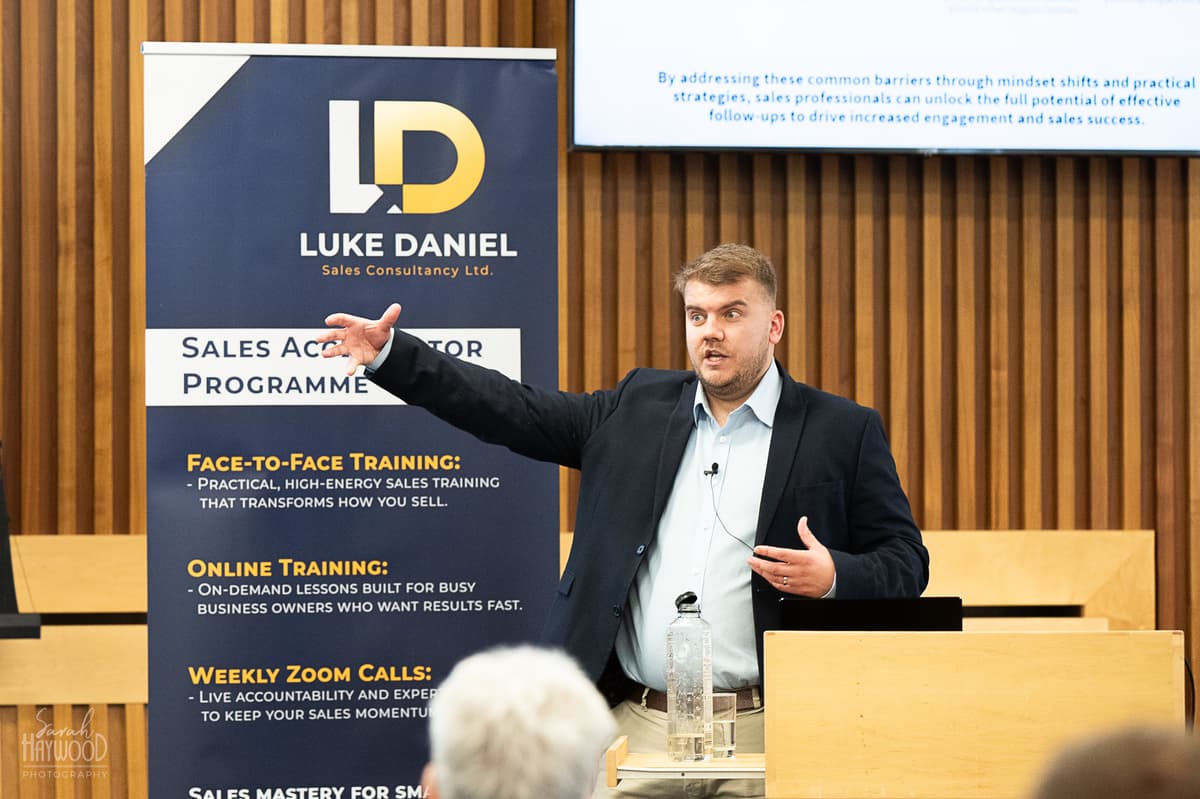
Better Sales Conversations
The direct answer: structure creates better outcomes
Better B2B sales conversations are not about being more charismatic or persuasive. They are about being more structured, more curious, and more deliberate in how you manage each interaction.
Most sales conversations drift. They start with pleasantries, move into a product demonstration, and end without a clear next step. The prospect leaves feeling informed but not compelled. The seller leaves feeling hopeful but uncertain.
The difference between a good sales conversation and a forgettable one is usually structure. When you open with purpose, ask questions that uncover real needs, and close with a specific commitment, the conversation becomes productive for both sides.
This is not about following a rigid script. It is about having a clear intention for every conversation and the discipline to follow through on it.
Why most B2B sales conversations underperform
The most common problem in B2B sales conversations is imbalance. The seller talks too much and listens too little. They arrive with a presentation, deliver it competently, and then ask "do you have any questions?" This is not a conversation. It is a broadcast.
Another frequent issue is a lack of preparation. Many sellers go into meetings without a clear objective beyond "build the relationship." While relationships matter, a meeting without a defined purpose wastes the prospect's time and rarely moves the deal forward.
There is also the problem of weak openings. If the first two minutes of a meeting are spent on small talk and a company overview, the prospect mentally disengages. They have heard company introductions before. What they want to hear is something relevant to their specific situation.
Finally, many conversations end without a clear next step. The seller says "I'll follow up next week" but does not agree a specific action. Without a mutual commitment, the conversation loses its momentum and the deal stalls.
A practical framework for stronger sales conversations
Building better conversations does not require a personality transplant. It requires a simple structure that you can apply consistently across different types of meetings and stakeholders.
The framework below works in UK B2B environments where buyers value professionalism, relevance, and clarity. It is designed to help you take control of conversations without being controlling.
Each element addresses a common weakness in how most sales meetings are run.
Conversation Structure
Step 1: Open With Purpose
Start every meeting by setting an agenda. Explain what you would like to cover, ask the prospect if there is anything they want to add, and agree how long the meeting will last. This signals professionalism and gives both sides a shared framework for the conversation.
Step 2: Explore Their World
Before talking about your solution, spend time understanding the prospect's situation. Ask about their current challenges, what they have tried before, what success looks like for them, and what constraints they are working within. The more you understand, the more relevant your response will be.
Step 3: Bridge to Value
Once you understand their needs, connect your solution specifically to what they have told you. Do not deliver a generic presentation. Reference their words, their challenges, and their goals. This demonstrates that you have listened and creates a direct link between what you offer and what they need.
Step 4: Close With Clarity
End every meeting with a clear, agreed next step. This could be a follow-up call, a meeting with another stakeholder, or a specific deliverable. Both sides should know what happens next and when. A vague "let's stay in touch" is not a close. It is a drift.
A realistic scenario: when structure transforms a meeting
Consider Rachel, an account manager at a digital marketing agency in Manchester. She has a meeting with the marketing director of a mid-sized retailer who is considering changing agencies.
In the past, Rachel would have started the meeting with a company overview, moved into a portfolio presentation, and ended by asking if the prospect had any questions. The meetings were pleasant but rarely led to clear next steps.
This time, she opens differently. She sets a brief agenda: "I'd like to understand your current challenges first, then share some relevant examples, and finish by agreeing whether there is a reason to continue the conversation. Does that work for you?"
The marketing director agrees. Rachel spends the first 15 minutes asking questions. She learns that the retailer is frustrated with slow campaign turnaround times, poor reporting, and a lack of strategic input from their current agency. She takes notes.
When Rachel presents, she does not show her standard portfolio. She references three specific campaigns where her agency reduced turnaround times, improved reporting visibility, and acted as a strategic partner. Each example connects directly to what the prospect told her.
The meeting ends with a clear next step: a follow-up call involving the retailer's head of e-commerce, scheduled for the following Thursday. Rachel did not pitch harder. She listened better, structured the conversation, and earned the right to continue.
Practical behaviours that improve sales conversations
Prepare a two or three point agenda for every meeting. Share it at the start and ask the prospect if they want to add anything.
Aim to spend at least 50% of the meeting listening. If you are talking more than the prospect, you are presenting, not conversing.
Ask open questions that start with "what", "how", or "why" rather than closed questions that invite yes or no answers.
Reference the prospect's own words when presenting your solution. "You mentioned that turnaround time is an issue. Here is how we address that."
Summarise what you have heard at the end of the discovery phase. Ask the prospect to confirm or correct your understanding before moving forward.
Never leave a meeting without agreeing a specific next step with a date. "I'll follow up" is not a next step.
Common mistakes that weaken sales conversations
Starting with a company overview. Most prospects do not care about your history. They care about what you can do for them. Lead with relevance, not credentials.
Presenting before understanding. If you move into your pitch before asking questions, you are guessing at what matters. Guesses rarely land well.
Failing to adapt. Using the same presentation for every prospect signals that you have not listened. Tailor your approach to each conversation.
Avoiding difficult questions. Asking about budget, decision-making processes, and timelines feels uncomfortable but is essential. Avoiding these topics creates surprises later.
Ending without a commitment. A pleasant meeting that ends with "we'll be in touch" is not a successful meeting. It is an incomplete one.
The commercial impact of better conversations
When sales conversations are structured and purposeful, deals progress faster. Prospects feel understood, proposals are more accurate, and objections are reduced because expectations have been set early.
For UK businesses selling complex products or services, the quality of your conversations directly affects your win rate. A team that runs better meetings will consistently outperform a team that relies on volume alone.
Better conversations also build stronger relationships. When a prospect feels heard, respected, and guided through a clear process, they are more likely to trust you, more likely to buy, and more likely to come back. The conversation is not just a step in the sales process. It is the foundation of everything that follows.
The best salespeople do not just talk well. They structure conversations that make it easy for buyers to say yes.
Continue developing these skills
B2B Sales Skills
Core B2B sales skills and frameworks for complex selling environments.
Read moreB2B Sales Training
Live training to build B2B sales skills in practice.
View courseIf you'd like to learn how to lead these conversations end-to-end with practice and feedback, the consultative sales training course walks through the full conversation in person.
Frequently Asked Questions
What is the most important part of a B2B sales conversation?
The most important part is the discovery phase, where you ask questions and listen before presenting anything. Understanding the prospect's situation, challenges, and goals allows you to tailor your response and make the conversation genuinely relevant.
How do I stop my sales meetings from drifting?
Set a brief agenda at the start of every meeting. Explain what you plan to cover, ask the prospect if there is anything they want to add, and agree how long the meeting will last. This simple structure keeps conversations focused and productive.
How much of the meeting should I spend listening versus talking?
Aim to spend at least 50% of the meeting listening. If you are doing most of the talking, you are presenting rather than conversing. Prospects respond better when they feel heard, and the information you gather makes your eventual response far more compelling.
Is buyer understanding the main issue to address first?
Better conversations can help, but the wider issue may sit in opportunity quality, qualification, value communication or deal progression.
The Sales Control Diagnostic reviews Prospect, Assess, Convert and Execute to identify whether the business is losing control during buyer understanding and qualification, or elsewhere in the sales process.